
The Silent Epidemic
The Silent Epidemic: Loneliness Among India’s Elderly
India is witnessing one of the fastest demographic transitions in the world. Today, the country is home to nearly 154 million senior citizens, and this number is expected to grow significantly in the coming decades. While increased life expectancy is a remarkable achievement, it has also brought with it a crisis that often goes unnoticed—loneliness among the elderly.
Studies indicate that between 14% and 48% of elderly Indians experience loneliness, depending on factors such as urban or rural residence, living arrangements, health conditions, and socio-economic status. Behind these statistics lie millions of untold stories of emotional pain, social isolation, and a longing for meaningful human connection.
When Television Becomes the Best Friend
One of the most heartbreaking indicators of this crisis is that an estimated 72 million elderly Indians consider television to be their best friend. The television is no longer just a source of entertainment; it has become a constant companion that fills the silence of empty homes. It speaks when no one else does, offers familiar faces, and provides a sense of routine in otherwise lonely days.
Yet, no screen can replace a heartfelt conversation, a warm smile, or the comfort of knowing someone genuinely cares.
A Growing Epidemic
Loneliness among senior citizens is no longer an individual concern—it is rapidly becoming a social epidemic. As families become increasingly nuclear, migration accelerates, and urban lifestyles become more demanding, elderly parents often find themselves living alone, despite having loving children.
This emotional disconnect is growing exponentially and has far-reaching consequences. Chronic loneliness has been linked to depression, anxiety, cognitive decline, cardiovascular diseases, weakened immunity, and reduced life expectancy. In many cases, emotional neglect can be as harmful as physical illness.
Why Are Our Elders Lonely?
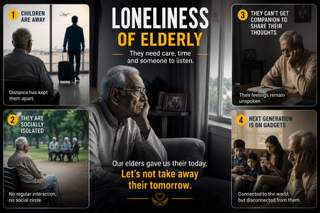
Children Are Far Away
Education, employment, and global career opportunities have led millions of young Indians to relocate to different cities or countries. While parents proudly support their children’s aspirations, the emotional cost is often immense. Festivals become quieter, family dinners become memories, and phone calls replace daily interactions.
Social Isolation
Retirement, declining mobility, loss of lifelong friends, and health-related challenges gradually reduce social interactions. Many elderly individuals spend entire days without meaningful conversations, creating a deep sense of isolation.
No One to Share Their Thoughts
Every individual, regardless of age, needs someone who will listen without judgement. Many senior citizens simply want to share memories, discuss their concerns, celebrate small victories, or express their fears. Unfortunately, they often lack a trusted companion who has the time and patience to listen.
The Digital Divide
Technology has transformed communication, but it has also created an invisible wall between generations. Today’s younger generation spends a significant portion of its time on smartphones, social media, gaming, and digital entertainment. Ironically, while families are more digitally connected than ever, they are often emotionally disconnected.
A grandparent sitting beside a grandchild may still feel alone when the conversation is replaced by scrolling through screens.
The Human Cost of Loneliness
Loneliness is not merely the absence of people; it is the absence of emotional connection. It slowly erodes confidence, reduces motivation, and diminishes the joy of living. Many elderly individuals begin to feel that they are no longer needed, valued, or heard.
The greatest tragedy is that loneliness often remains invisible. Unlike physical illness, it leaves no visible scars, yet its impact can be devastating.
A Collective Responsibility
Addressing elderly loneliness requires participation from families, communities, healthcare providers, policymakers, and social enterprises.
We can make a meaningful difference by:
- Spending quality time with elderly family members.
- Encouraging regular social interactions and community engagement.
- Creating opportunities for companionship and emotional support.
- Leveraging technology to connect families while ensuring it complements—not replaces—human relationships.
- Building neighbourhood networks and professional elder care services that prioritise emotional wellbeing alongside physical care.
Towards a More Compassionate Society
A nation’s progress is measured not only by its economic growth but also by how it treats its elderly citizens. Every senior deserves dignity, respect, and companionship. As India’s elderly population continues to grow, addressing loneliness must become a national priority rather than a private family concern.
The solution is surprisingly simple, yet profoundly powerful: presence, conversation, empathy, and care.
Sometimes, the greatest gift we can offer an elderly person is not medicine or money—but our time, our attention, and the reassurance that they are not alone.
Because no elder should have to find their best friend in a television when they deserve the warmth of human companionship.